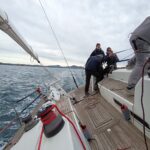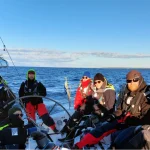
The ARC racing class requires that a certain proportion of the crew must have at least 500NM of continuous open-sea experience gained within the last 6 months. We agreed to undertake a trial sail from Fuengirola to Las Palmas.
Our schedule was also dictated by the need to time our passage to coincide with a suitable tidal window for Gibraltar and to sail past the orca grounds whilst it was still light.
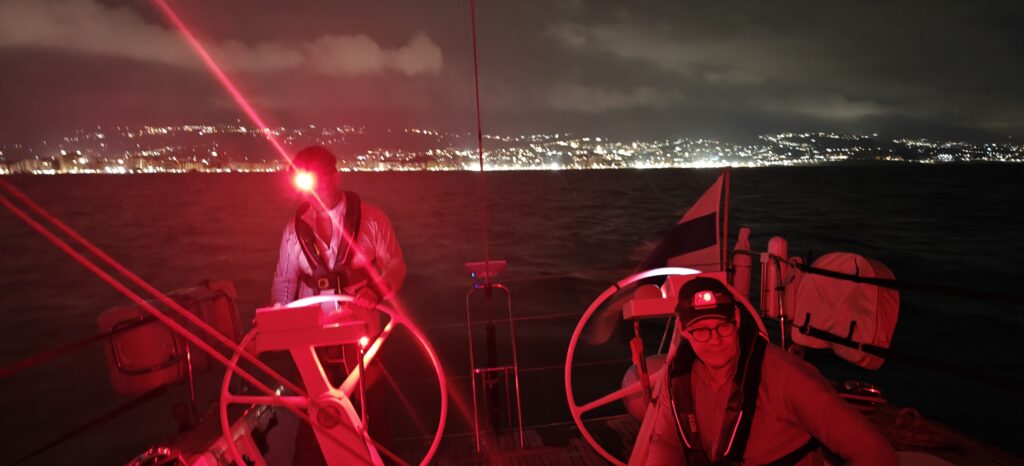
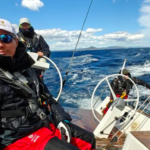
We set off at half past four in the morning, and the winds were favourable for sailing. Gibraltar was, as usual, shrouded in a ring of cloud, and the winds were a bit tricky, so we ended up sailing the final stretch along the shipping lane (so we didn’t cross it directly to the African coast, as the rules require). Although the tide was in our favour, the sea was certainly lively. On those first Atlantic waves, we were already surfing at 15.1 knots. Fortunately, we didn’t spot any orcas at all. Based on online sightings, they had already moved further north.
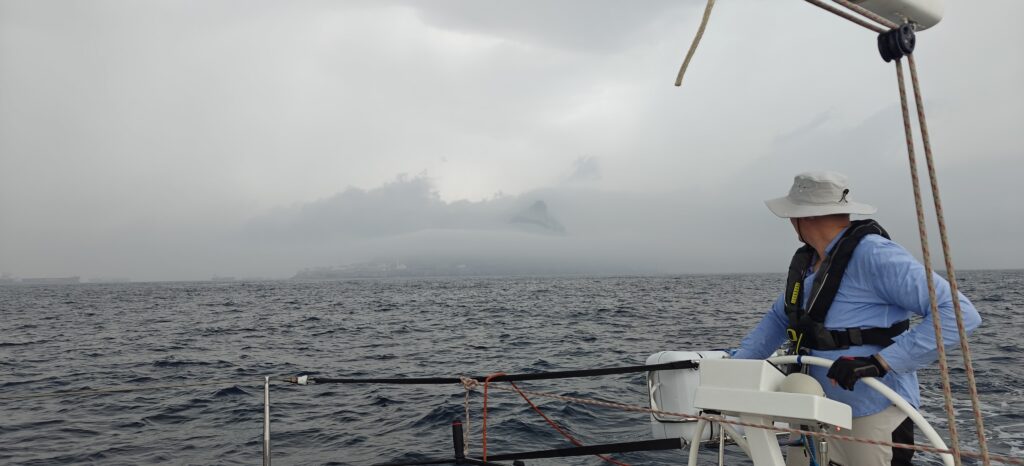
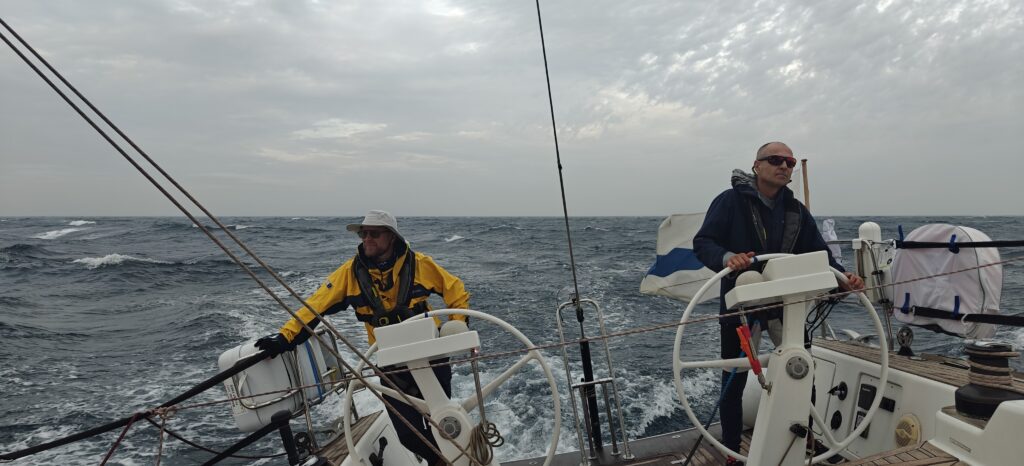
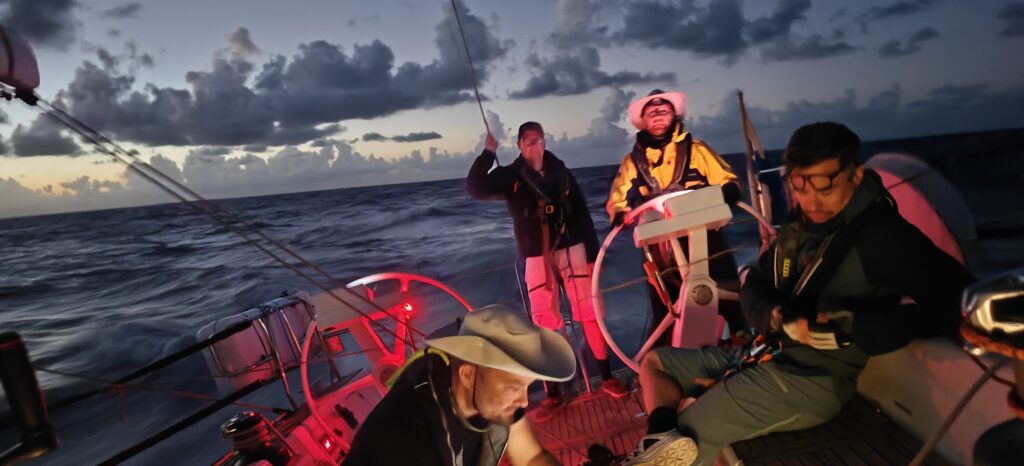
Our first night off the coast of Africa was eventful. At times, a dry foehn wind blowing in from Morocco reached 30 degrees, whilst a cold, damp wind blew in from the Al-Tann. This created thunderclouds and the winds swirled wildly. Our new, high-quality radar enabled us to prepare fairly well for the squalls and navigate around the rain showers.
The temperature was surprisingly chilly due to the rain; long-sleeved clothes were a must. We took turns navigating around thunderstorms, fishing boats and large fishing grounds. Surprisingly, there was plenty to do even though we’d reached the open sea. A large drone even flew over from Morocco to film us, but otherwise, thankfully, it was peaceful.
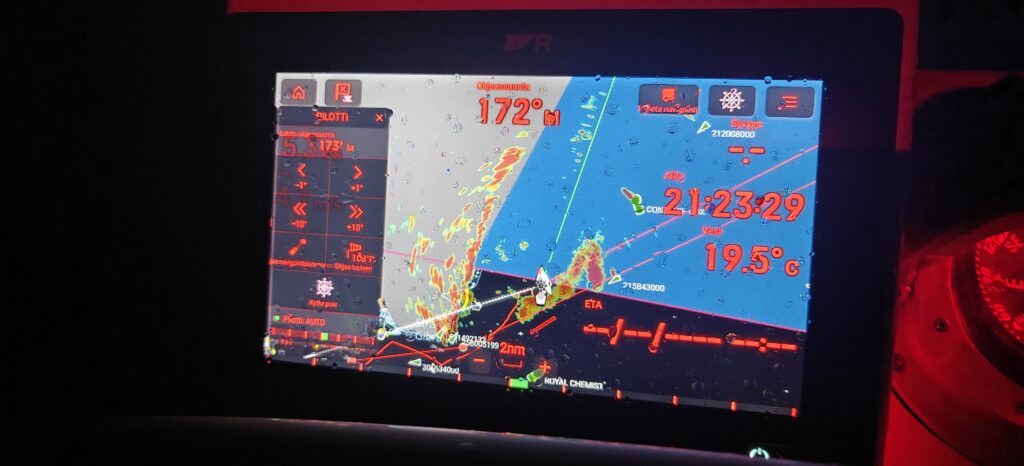
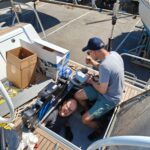
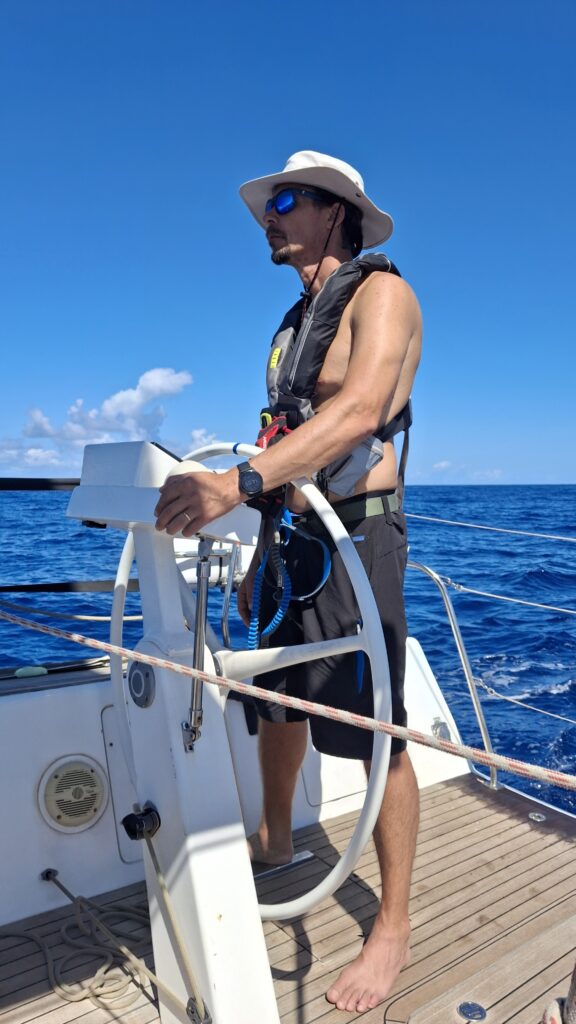
Our first day on the Atlantic brought a surprise with grey skies and rather chilly weather; mind you, shorts were fine, and the water started to warm up towards the Canary Islands’ 24.5 degrees. During the day, however, it was surprisingly calm; we even motored along to recharge the batteries, whilst testing the watermaker at the same time.
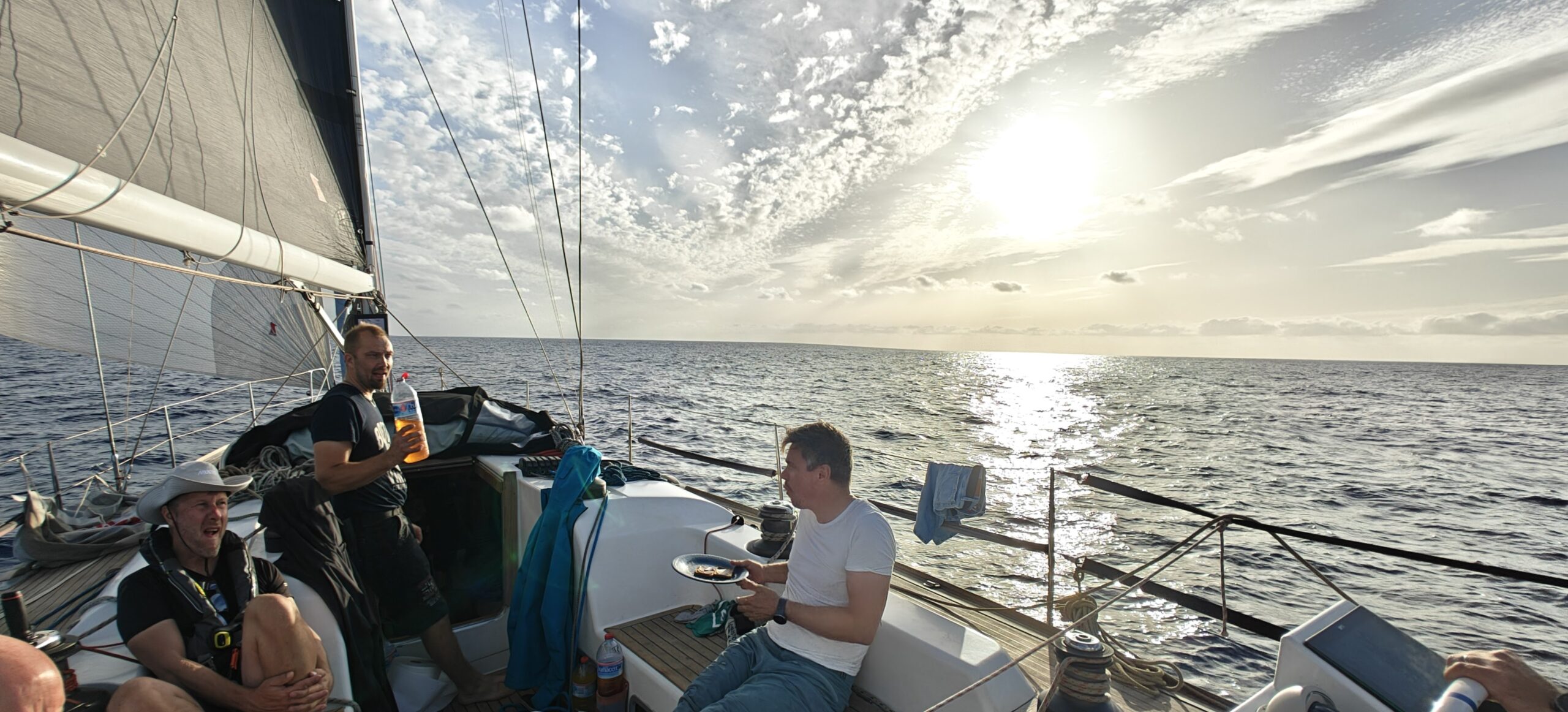
We also got to try out the Code 0 and the A2 in light winds. The food was good, and the cooking rota (based on the principle that everyone cooks and everyone takes a turn at the helm) received praise from everyone. At the same time, we realised that the bow berth is perfectly sleepable even on the Atlantic; there was plenty of room for two there.We also have sea cots in the open deck, so everyone has a place to sleep, although of course at least two (usually three and sometimes four) are on watch.
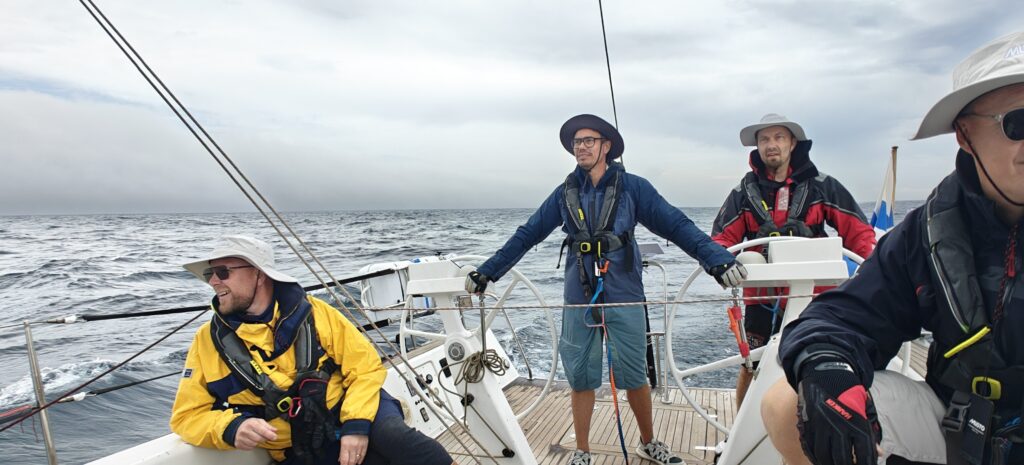
In the evening, the winds picked up again, and thunderstorms flashed on the horizon; we’d opted for the outer route in the hope of better winds, and this allowed us to navigate round the storm fronts quite effectively, so we didn’t end up right in the middle of the lightning again tonight. There were hundreds of flashes, though, and at times they came almost non-stop. Now, however, there were hardly any gusts, even though the wind picked up steadily as we approached the rain front. There was still enough cargo traffic to keep us on our toes whilst monitoring both the radar and the AIS display.
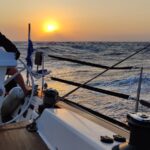
On the third day, the sun was shining and the weather warmed up nicely, just right. The sunrise and the whole day were beautiful. A brief lull in the wind allowed us to go for a swim in the waves of the Atlantic, which was about 3 km deep. We ate pancakes and everyone really enjoyed the trip out to sea.
The evening gave way to a beautiful sunset and a lovely night. It was thrilling to gaze at the changing starry sky; the past few nights had been bright only by the light of the stars. The clouds appeared as dark patches, and the sky was a deep blue as the stars shone. For example, the Big Dipper only came into view in the early hours of the morning, rising majestically from the sea with its ‘ladle’ leading the way. The stars were truly bright and seemed somehow further apart. The Milky Way shone magnificently across the sky. It was magical to sail through the black night along the path of the Milky Way, accompanied by the sounds of the roaring stern and the lapping bow.
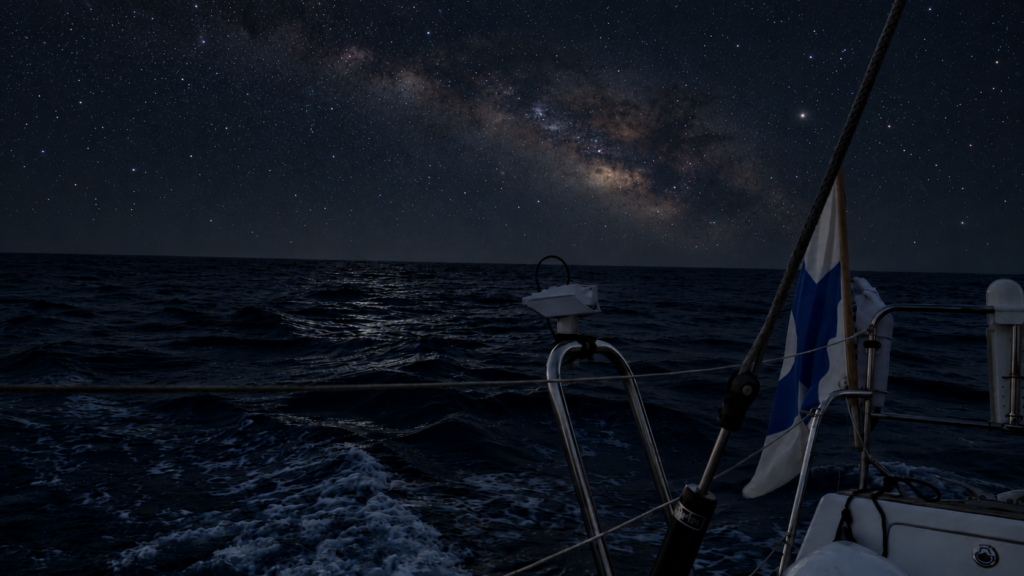
(The sky in the image has been edited)
The name ‘Birds Trail’ derives specifically from the mythology of Eastern Finland and Northern Eurasia (the name is the same in Finnish and Estonian, whilst in Northern Sámi it is ‘the bird’s stairs’). This is because, particularly in autumn, the Milky Way lies in the same direction as the migration routes of birds (such as swans).
It was believed that birds flew along the Milky Way to Birdshome, a mythical warm land at the edge of the world (that’s where we were headed, too). Seen from Finland, there was a gap at the boundary between the sky and the earth through which the birds could pass to spend the winter.
In Finno-Ugric cosmology, the Milky Way and its stars might also have been seen as a vast flock of migratory birds, with the stars representing human souls on their journey to the afterlife. In this way, the migration of birds was linked not only to the changing seasons but also to the cycle of life and death.
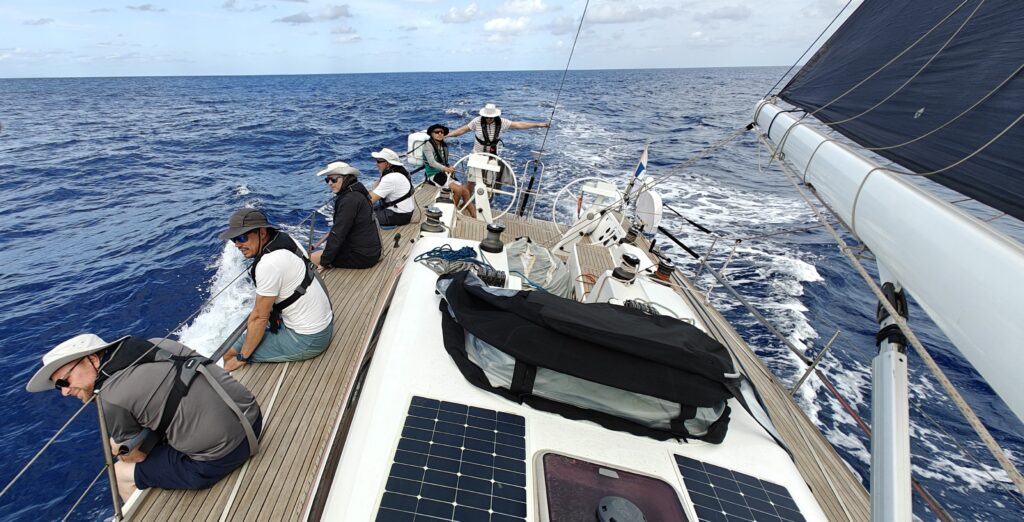
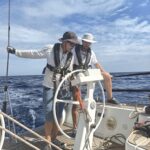
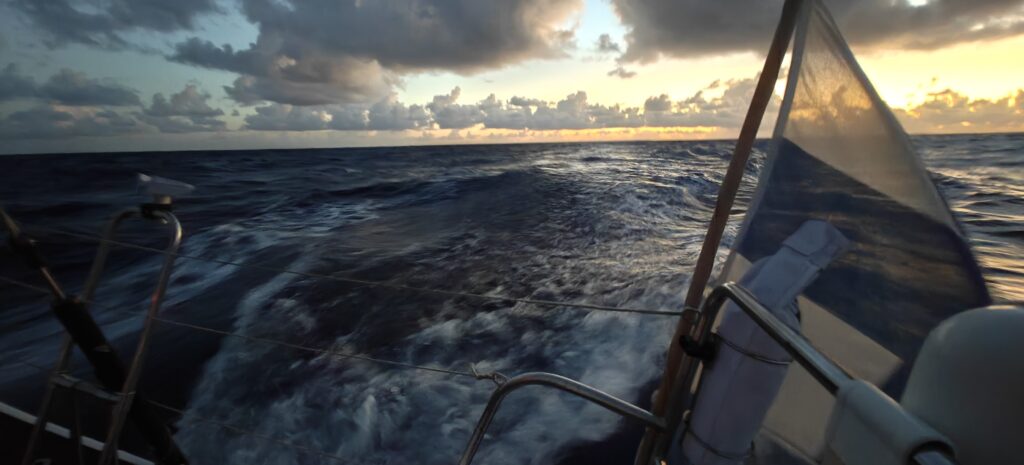
On the last day, the winds shifted to a more favourable direction, and we were able to sail the A5 on the Genaager in moderate swells. It was good practice for the crossing itself, both throughout the day and into the night. We had to stay alert at the helm for an hour to ensure we didn’t get too far upwind (we came close to broaching on a couple of occasions) or end up in an accidental jibe (we had a few of those too), as waves of about 2–3 metres were pushing the boat from behind. Thanks to the stars and good instruments, we managed to maintain a good heading, and gradually each helmsman got the hang of it. During the night, we had some brilliant bursts of speed on the A5, reaching up to 13 knots, though those trying to sleep didn’t necessarily appreciate the boat’s rolling. But this is a good starting point from which to set off on a long voyage with a bit more experience under our belts.
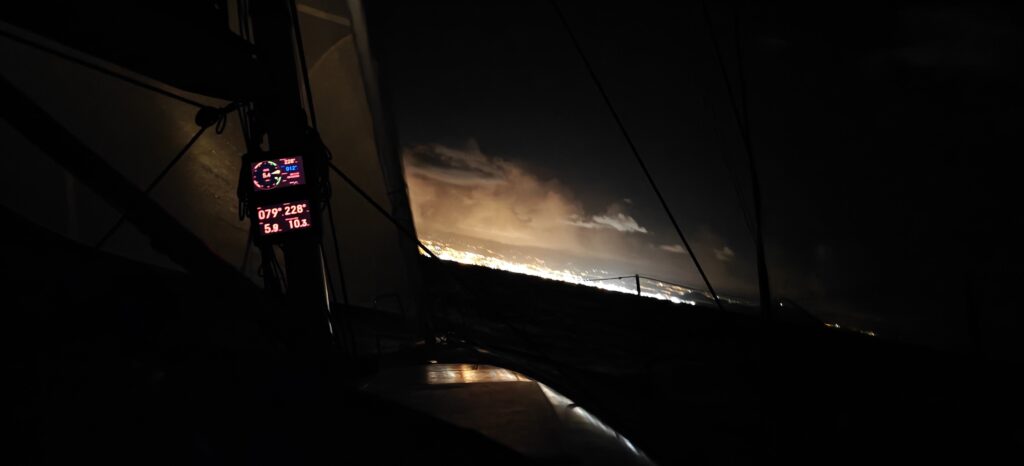
As the dusk fell, Juuso shouted, “Land in sight!”, and sure enough, the lights of our destination, Gran Canaria, began to shine on the horizon. Some of those on night watch, a little impatient, stayed on deck; we would soon be there. The night was long, however, and a nap was needed; the sails were not lowered until after four o’clock off the coast of Las Palmas, and we sailed into the customs quay with everyone awake. We had radioed our arrival in accordance with the regulations, and the customs operator in Las Palmas welcomed us.
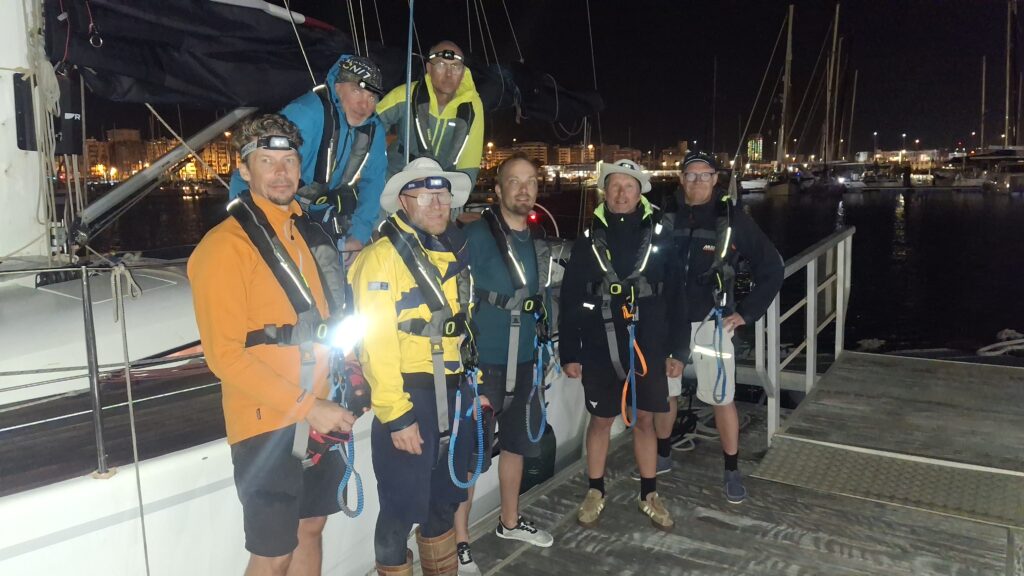
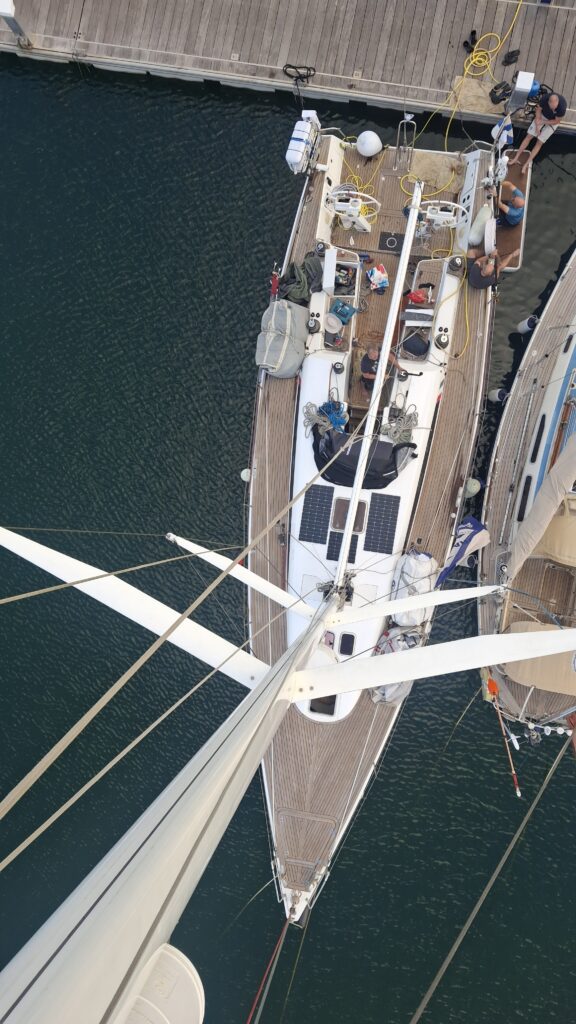
After the usual morning checks, we arrived at ARC’s main jetty (L/10) at berth 12 – feel free to come and have a look at the boat. Now our long-held dream of crossing the Atlantic is really starting to feel real, and the culmination of this two-year project is just around the corner.
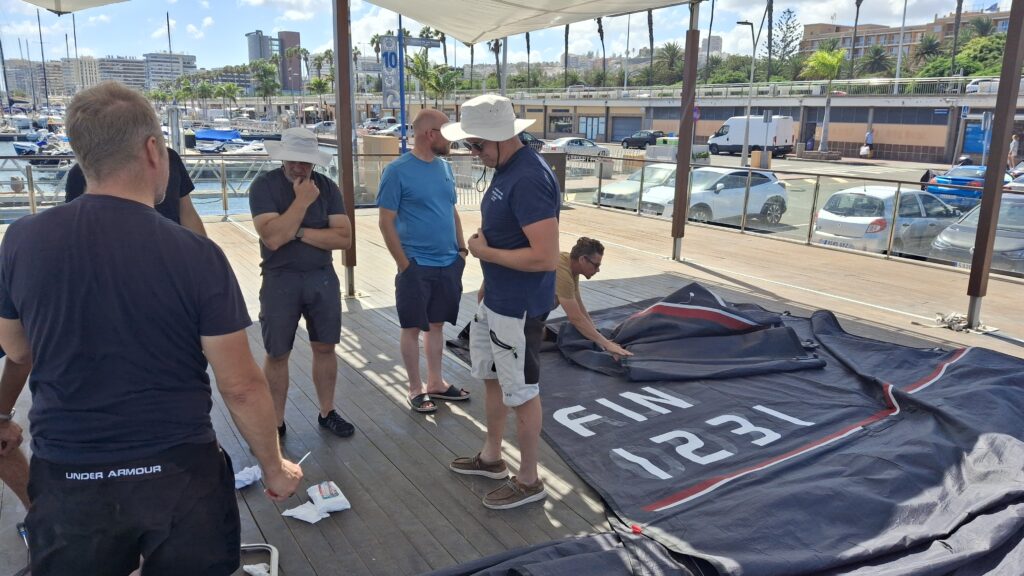
We spent a couple more days getting the boat ready – fitting the sail numbers, securing the rigging and sails, and sorting out all the little bits and bobs that a boat needs. Then off to Finland and back in November!
Written by: Tommi
You can also find videos and photos of our sailing trip on our Instagram account @sybluemoon.fi