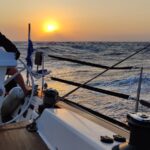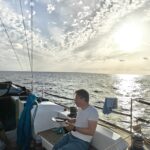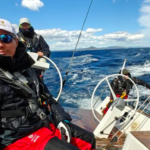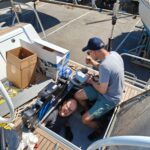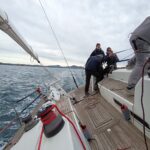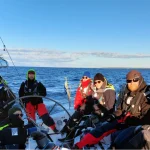
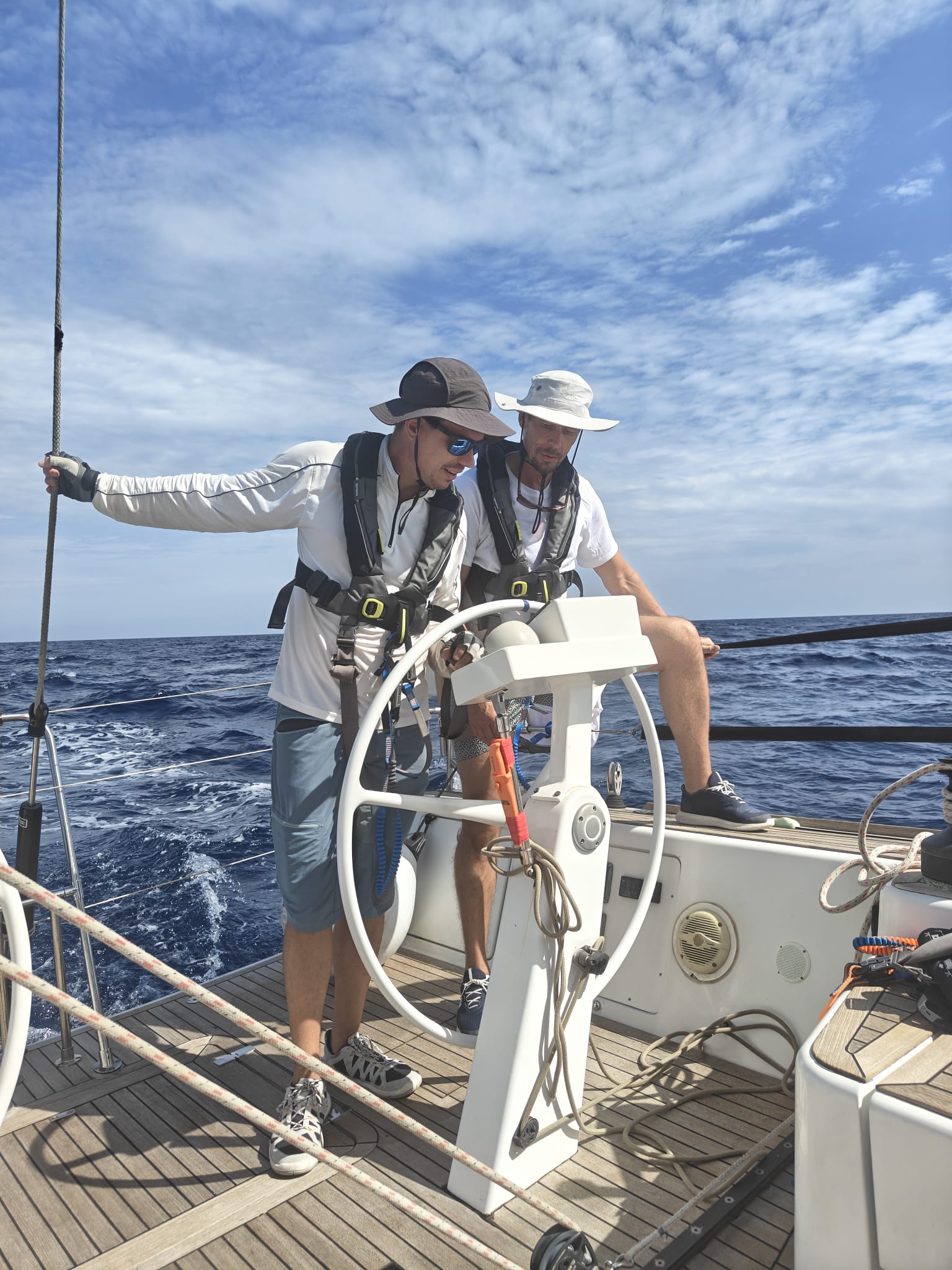
In Spain, the team spent several weeks sailing and preparing the boat. In the last week of September, it was time to move the boat to Fuengirola, where we stocked up on supplies for the ‘final sail’ before setting off for Gran Canaria with the whole team.
This final transfer before crossing the Atlantic was the responsibility of Tommi and Jere; we took our partners along, and on a couple of legs our twin daughters, Viola and Jade, were also with us.
Shopping trips and swapping sails and the liferaft in Torrevieja were still on the agenda before departure. We’d left some of the sails there for storage, and the liferaft we’d just bought was also left there and put up for sale. We’d gone through the requirements for the offshore racing class in more detail on an offshore safety course in Lohja (the course itself was also part of the requirements), and we realised that our liferaft did not meet the standard required for the open-sea racing class. Well, we had to get a new one.
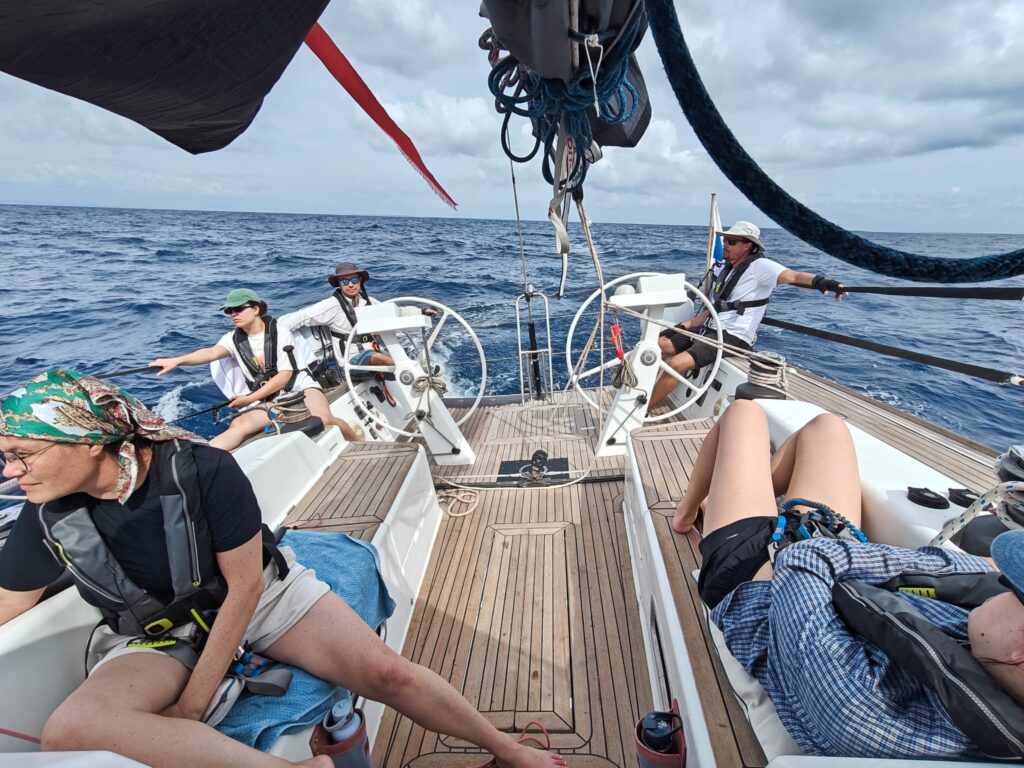
On Monday morning, we set off on the first leg towards Cartagena. At times we had a pleasant crosswind, at others it was almost windless, but with a reasonably steep, old swell, we managed to sail the first leg. Unfortunately, the girls’ stomachs weren’t used to the swell yet, so they were seasick for the rest of the leg.
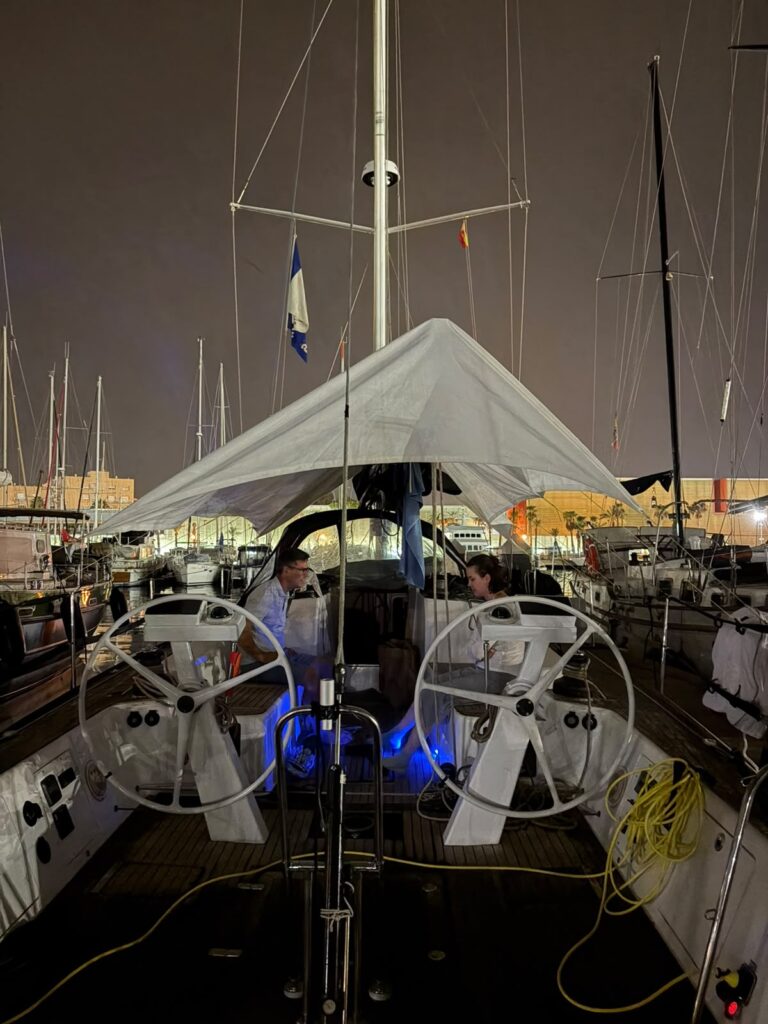
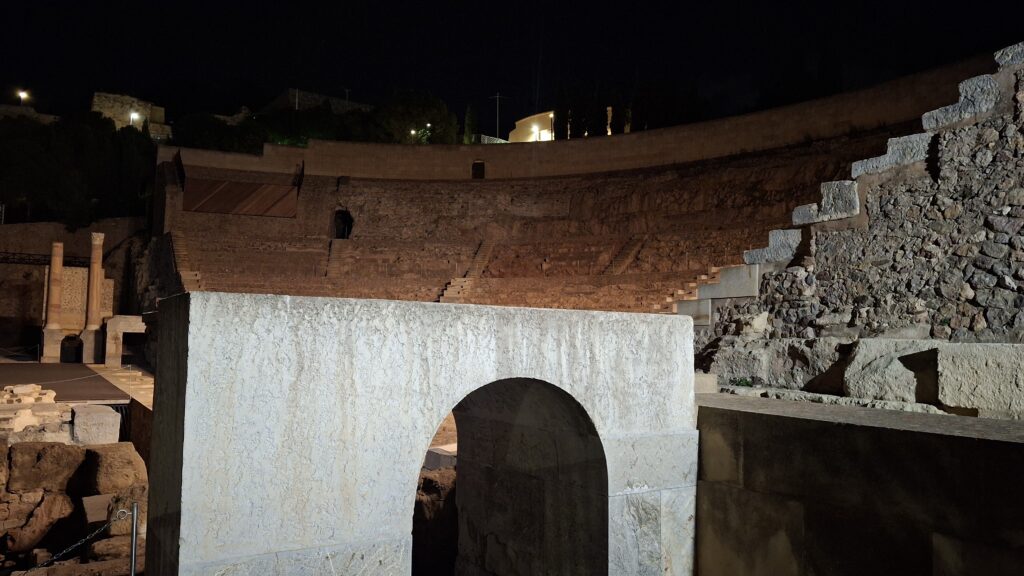
However, the town of Cartagena made the trip worthwhile in the evening. The girls ended up staying there as tourists and only joined us for the final leg of the journey. The town was one of the prettiest Spanish coastal towns I’ve ever visited, with a beautiful and clean old town, and a truly magnificent ancient Roman amphitheatre
.
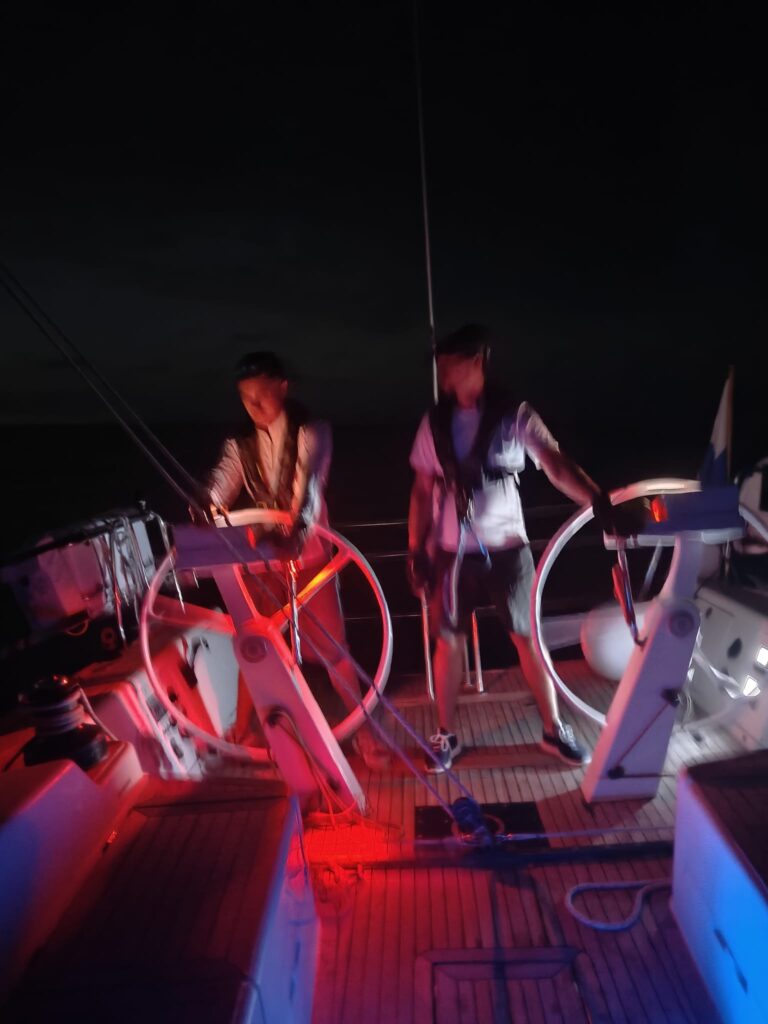
Next, we had planned an overnight sail towards the small “Del Este” marina. The winds were stronger and we managed to sail right up until nightfall; the atmosphere was brilliant, and even the ladies got to experience an overnight sail on the Mediterranean. It was a beautiful night; the half-moon shone brightly, casting a bridge across the sea. The winds shifted frequently, so there was plenty to do even at night. The shifting winds and manoeuvring to avoid the tankers visible on the ASI kept the watch crew awake. There was also a brief lull during the night when we motored for an hour, but then the winds picked up to 5–6 m/s and we hoisted the sails again. In light winds, I managed to tack on my own whilst on watch, using the wind angle with the autopilot.
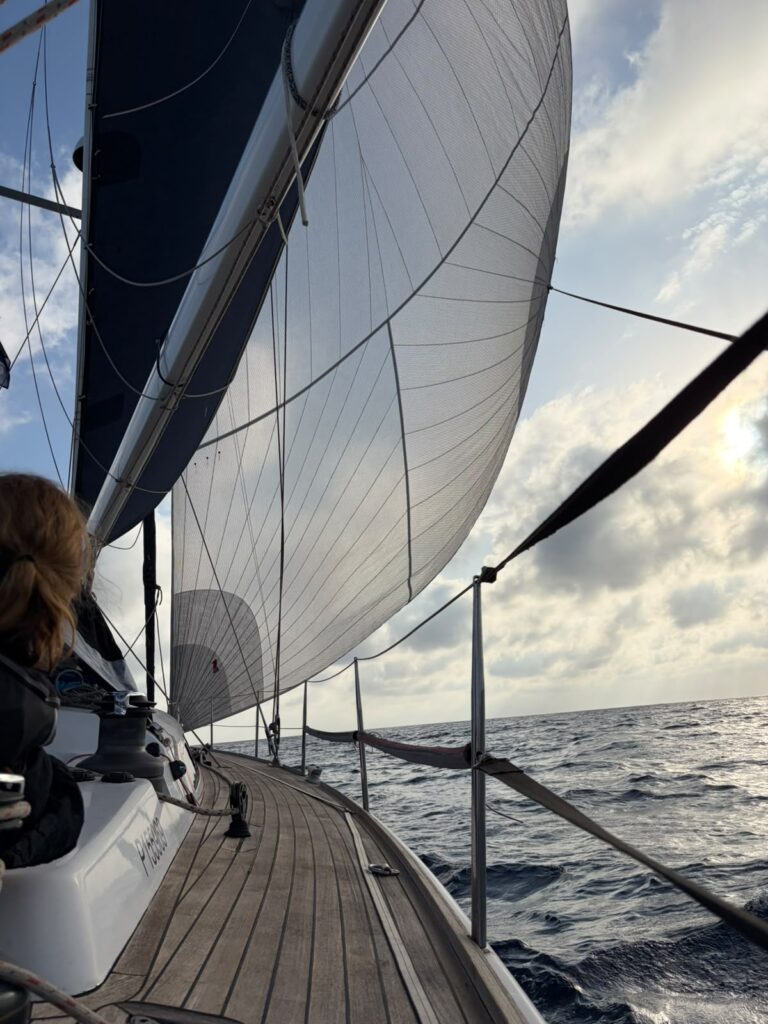
In the morning, we got to enjoy the Code 0’s capabilities in light headwinds; a wind of just a few metres per second was enough to propel the boat at 4–6 knots – a real pleasure!
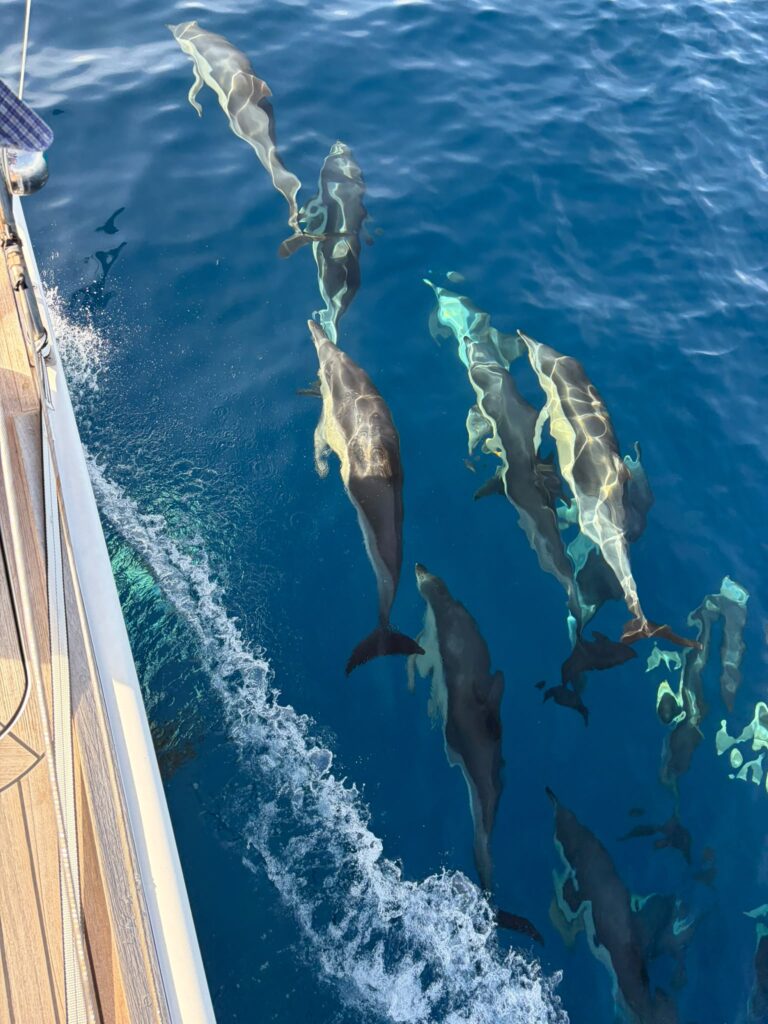
When we arrived in Del Este, the engine wasn’t running properly, but the cause turned out to be clogged filters due to bacteria in the diesel. Jere sorted out the cleaning in the harbour, and in the morning we continued our journey towards Fuengirola. The absolute highlight of what was a rather long day’s sailing was when a pod of dolphins – a large one at that – came to play in the bow waves. It’s always thrilling to see dolphins – they never fail to move you, with the joy and intelligence that shine in their eyes.
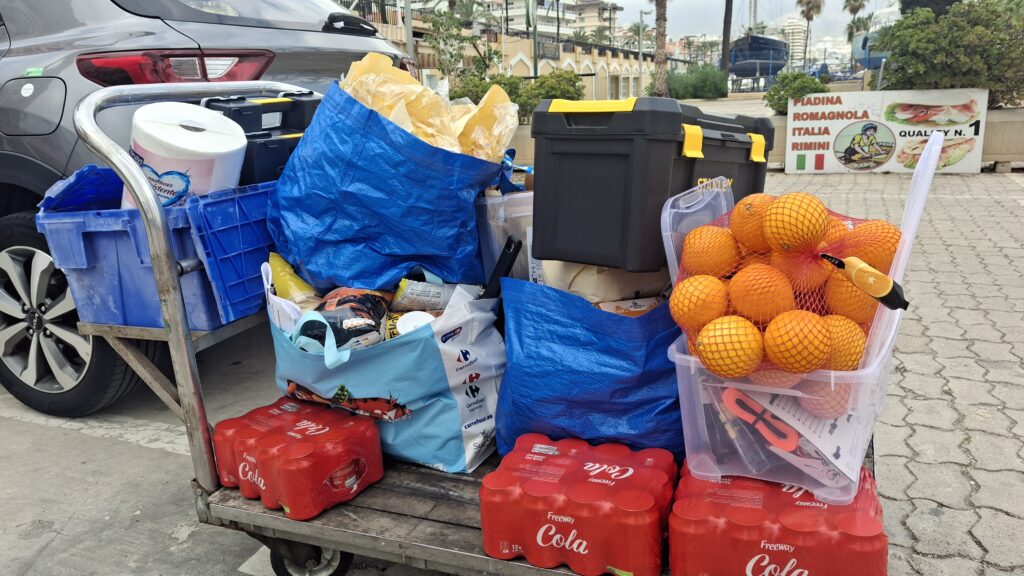
We spent the evening in Fuengirola. The ladies set off for Finland on Friday morning, whilst Jere and I spent a couple more days getting the boat ready and went round the shops doing a massive bit of shopping. We bought some extra food in Fuengirola, and most of the dry provisions for the Atlantic crossing.
- Tommi