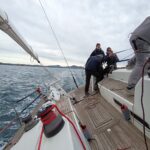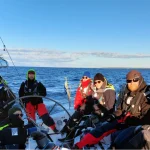
Working trip 26–30 April 2026: HKI–NCE–HKI. Arto, Harri and Janne set off on the trip
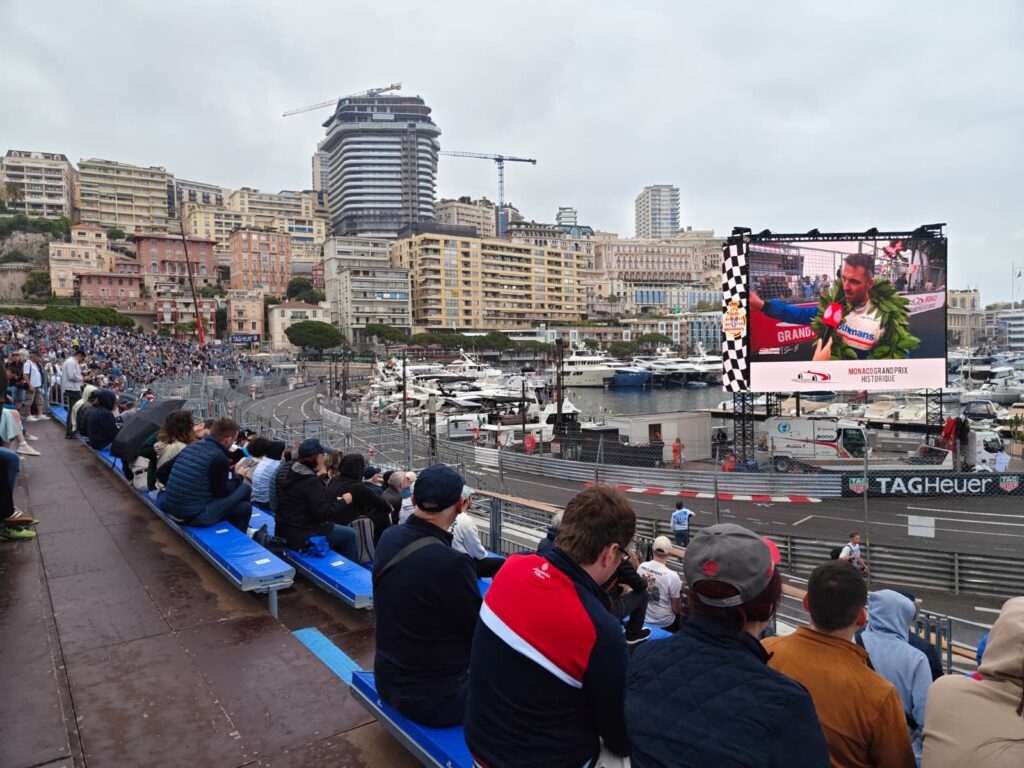
Our flight to Nice landed on Sunday morning. As the marina was closed on Sundays, we decided to drive to Monaco in our hire car. To our surprise, the Monaco Historic Grand Prix was taking place. We went to hang about by the gates of the spectator area, listening to the sounds, breathing in the smell of petrol and catching a glimpse of the vintage racing cars whizzing past. The threat of rain had put off a friendly couple from watching the race, so they gave us a couple of tickets to the Formula One event. We bought a third ticket and made our way to the stands with our fingers pressed against our ears. We got to watch Formula cars from the 1950s to the 1980s racing on the legendary Monaco street circuit, at the Tabac bend off the harbour. A familiar name, K. Rosberg, was taped to the side of one of the cars. Early in the evening, we arrived at our accommodation after a couple of hours’ drive on the motorway. The host charged us an extra €20 for our late arrival, but he fully understood the enthusiasm of us balding men for historic Formula cars.
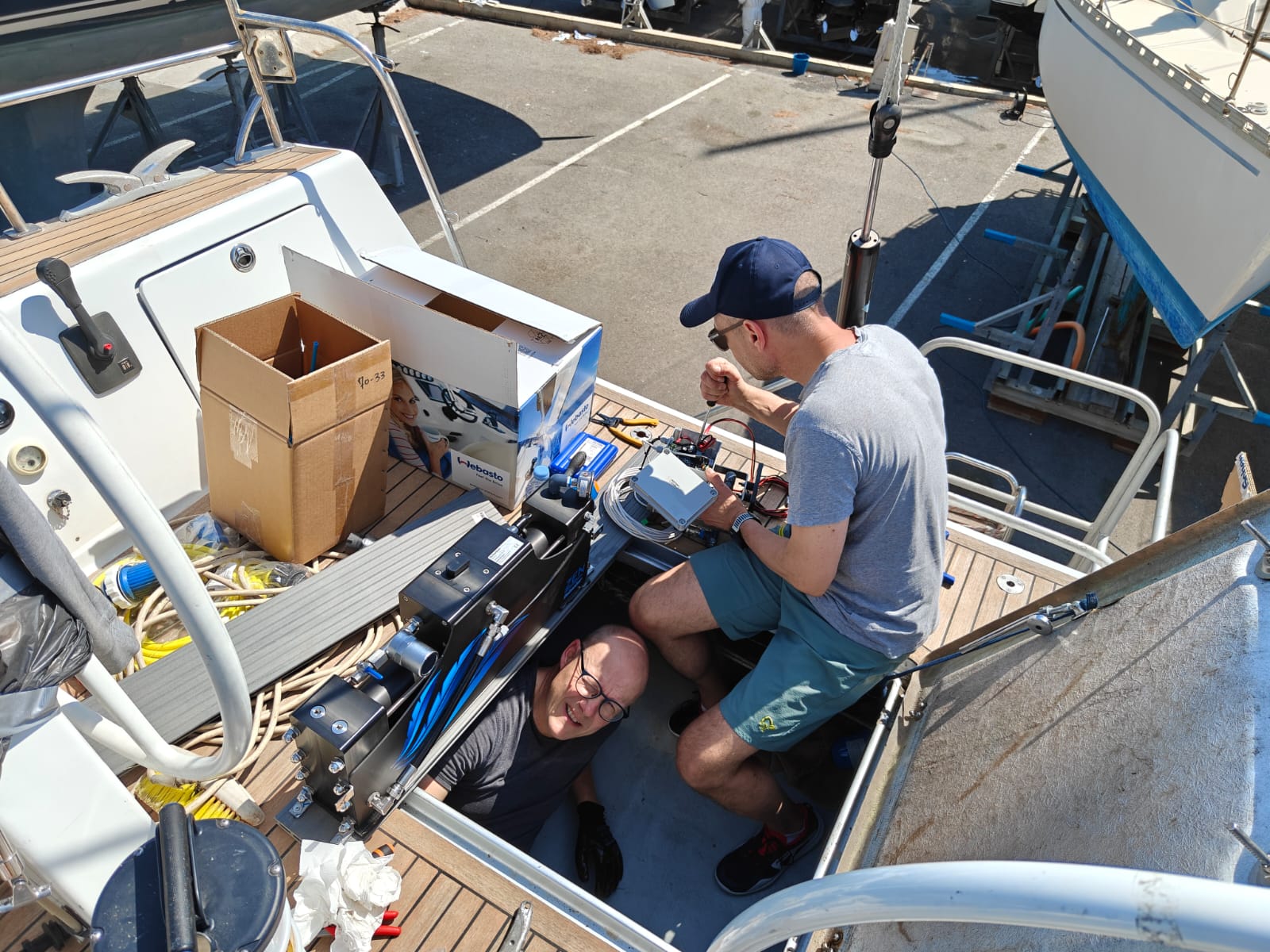
Monday morning began with us opening the parcel we’d sent from Helsinki, which had arrived at the RC Marine hall. All the equipment had arrived in one piece. The morning was spent carrying several cardboard boxes onto the boat and clearing any excess items off it. The equipment to be installed included: a Schenker Zen30 watermaker, a Webasto AirTop Evo 40 heater, Raymarine Axion series chartplotters, mast-mounted displays and a radar, Sunbeam System lithium batteries (3 x 10⁸ A), solar panels and Moonray controllers, a Victron battery monitor and USB sockets in the cabins. The original VHF radio had to be replaced so that we could programme the vessel’s own MMSI number into it. The radio was purchased from a local marine supplies shop for €269. Tracing the routes of the heating system’s air ducts, the wiring harnesses and the water hoses through the bulkheads and fittings caused a great deal of headache, drilling and dismantling of fittings. Drilling holes in a boat is, by its very nature, a risky business. The key point when drilling is to measure twice and drill once – preferably rather than the other way round. When drilling with a countersink bit, you must check that the centre punch has made a mark before drilling through the countersink bit.
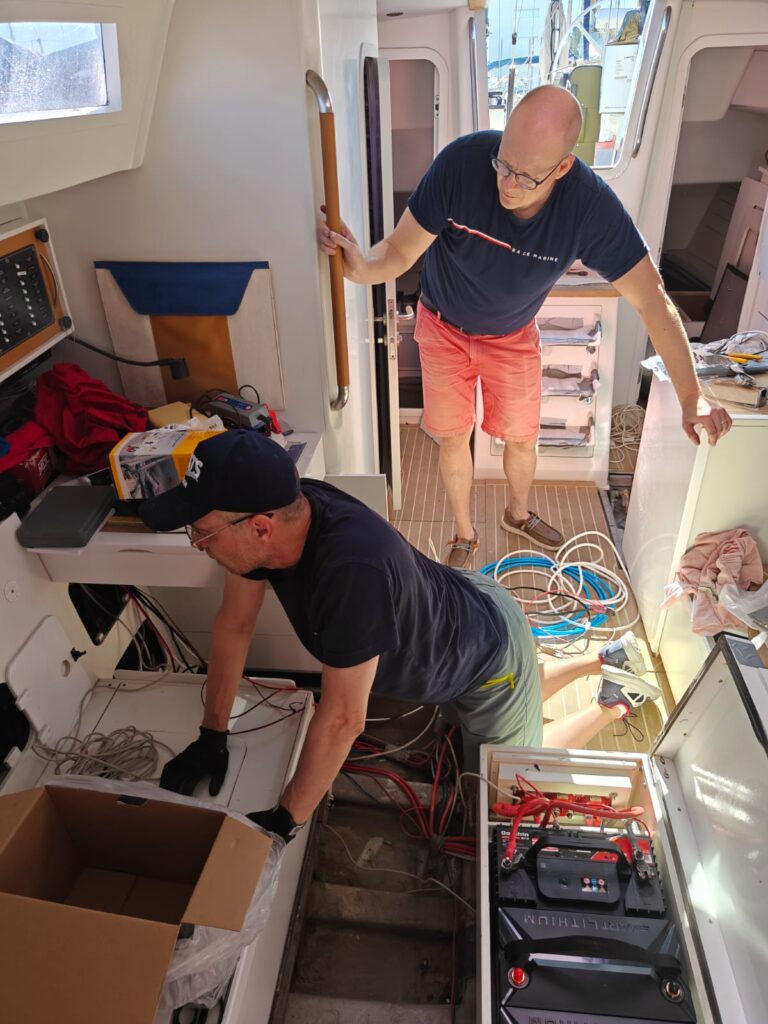
During the unpacking and dismantling of the fittings, the boat is rather like a small house during the installation of kitchen units, with tools and fittings constantly going missing and bits and bobs strewn about. Space for technical equipment on a boat is limited, and the aim is to conceal everything as much as possible. Makita’s cordless vacuum proved to be an excellent tool, allowing us to clear away drilling dust straight away. The exciting tinkering made the fitters lose track of time; on many occasions, we realised after midday that hunger and thirst were significantly impairing our ability to function. The locals were, of course, taking their siesta at this stage. The shipyard area closed at 6.30 pm, at which point we set off on a hunt for supplies at hardware shops and specialist retailers. Hours of crawling and scrambling began to pay off, and by Wednesday the instruments and control panels were in place. On Thursday morning, we handed back the flat, finished off the installations on the boat, collected the packaging waste for recycling and secured the boat’s hatches. We drove to Nice in our hire car and caught our return flight to Helsinki.