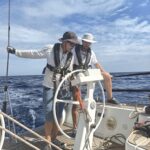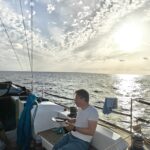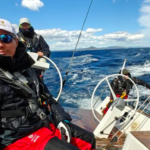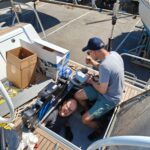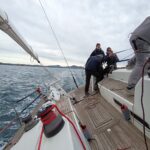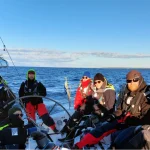
The third transfer sail took place in July. Third time lucky. The first two attempts had ended in withdrawal. Juuso, Timo, Antti and Janne set off on the trip. Kyösti from Rovaniemi and Sami from Hämeenkyrö agreed to help out. The reconnaissance and fire station preparation team consisted of Janne, Kyösti and Sami. We set off from Helsinki on the morning of 22 July, and the flight from Helsinki to Nice arrived before midday. We took with us the struts for the mast collar, a repaired pedestal and a pre-assembled mount for the Starlink dish on the aft deck. At the railway station in Nice, it took a bit of faffing about to find the right platform for the train to Toulon. It was sweltering, and with our luggage in tow, we were dashing about all over the station in every direction. We finally arrived in La Seyne and took a taxi to the harbour.
Checking the rudder bearing mounting required a small epoxy filler injection. I popped into town by taxi and picked up a few syringes from the chemist’s. The job was a success and the rudder bearing was finished off with sheet metal. We had to fit a grommet for the kitchen sink and the fridge drain pipe. This needed replacing due to a leak that had developed. By evening, our pleasure boat was ready for launch.
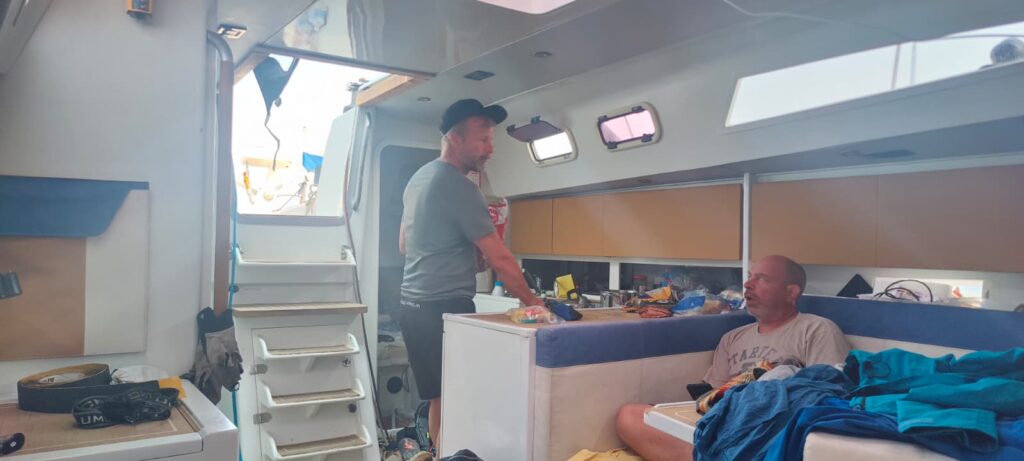
At this stage, the lack of rational thinking caused by our deteriorating diet nearly drove our strike team to a nervous breakdown. We faced the challenge of finding the location of our accommodation amidst a jumble of instructions. After a huge effort, we finally found the neat Airbnb flat we’d booked near the harbour. Time to wash, eat and sleep.
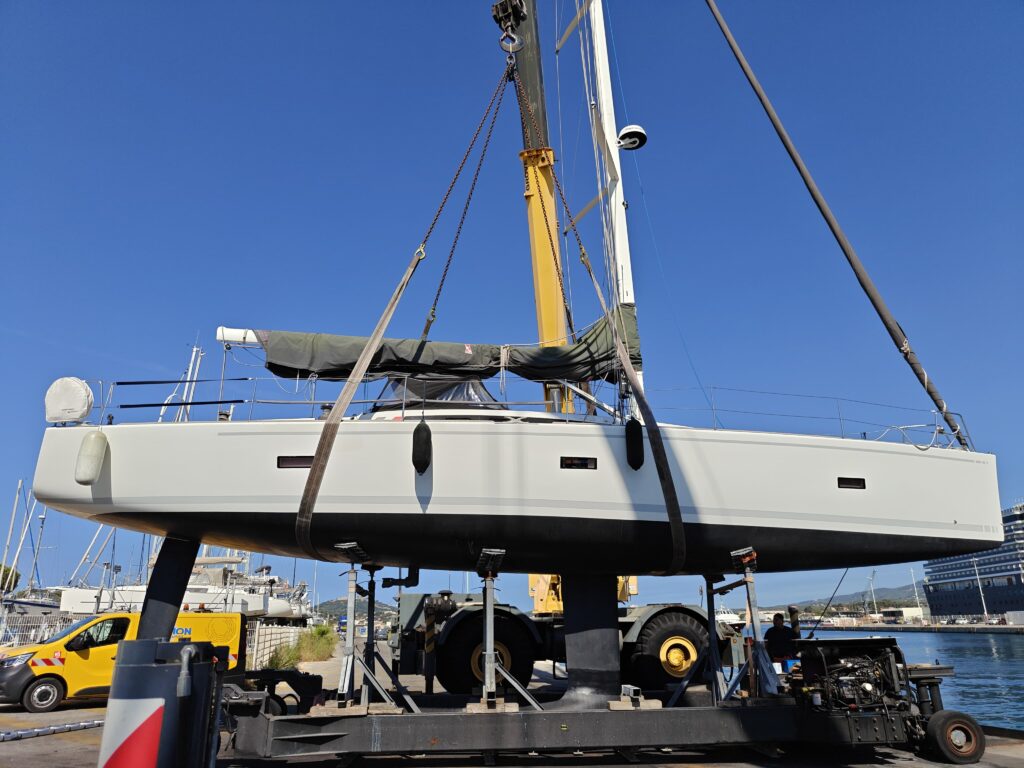
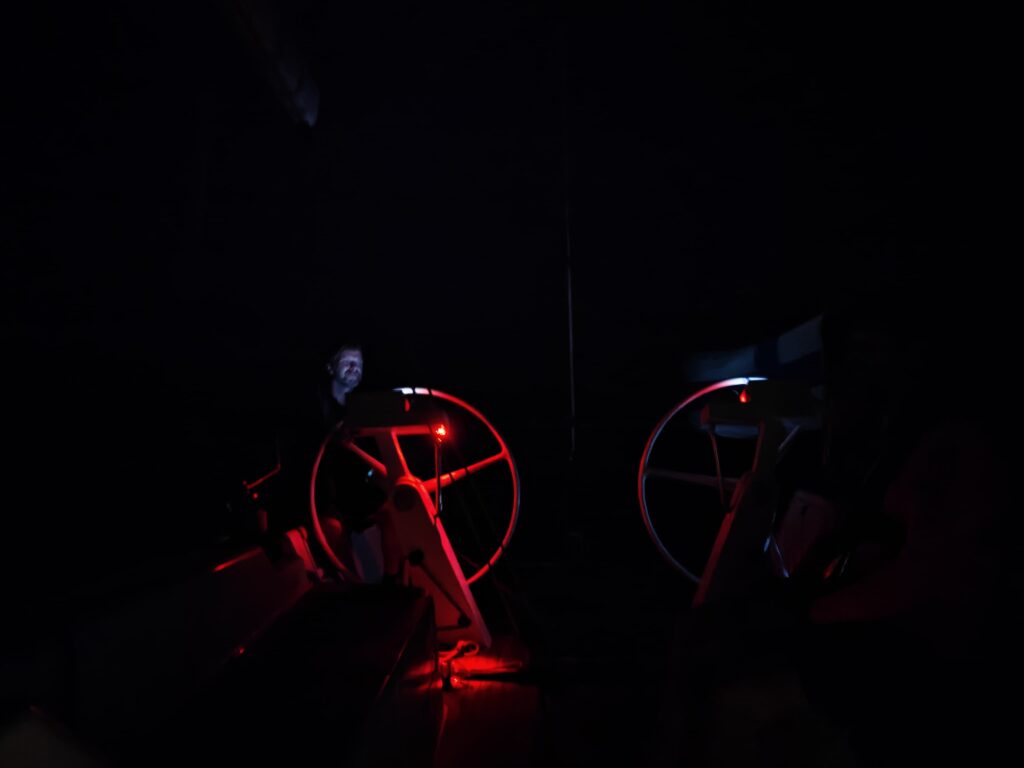
On the morning of Thursday 23 July, the friendly crew at the harbour launched the boat. At this stage, the repaired pedestal was fitted, and at the same time the night-light LEDs were installed on the steering consoles. Then it was time to stock up. We filled the boat with provisions and water. The rest of the crew – Antti, Juuso and Timo – arrived. We fixed the mounting for one more railing post. As evening fell, we bid farewell to LaSeyne and set course, the bow pointing towards the darkening horizon and the Iberian Peninsula.
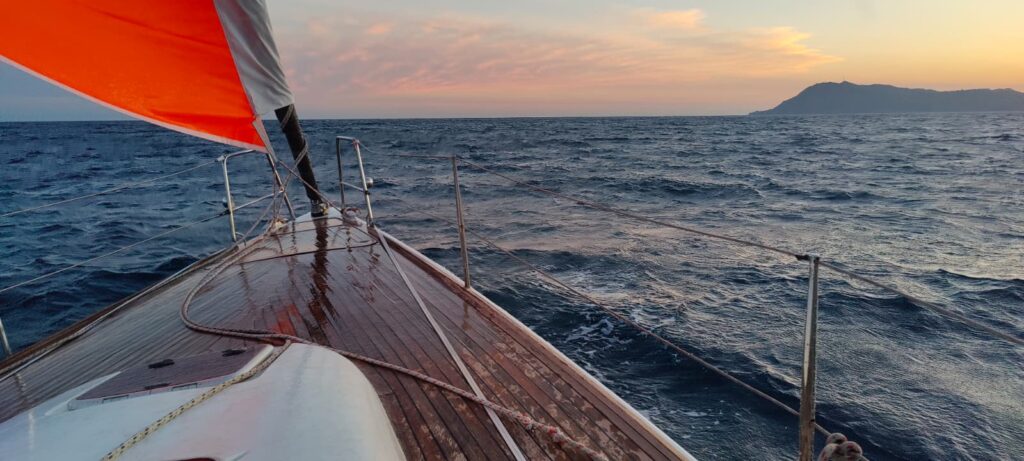
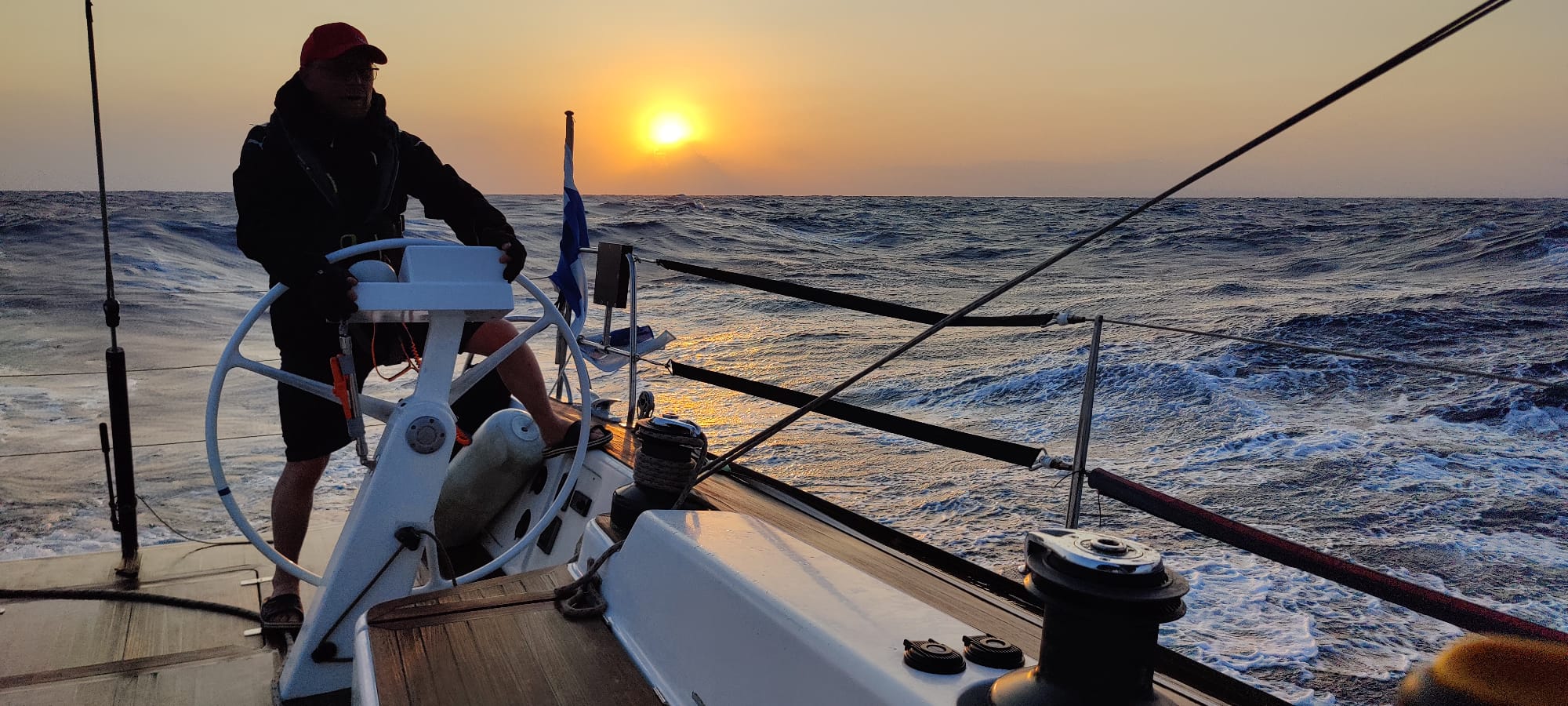
The wind is just under 10 m/s and the swell is around one and a half metres. For the night, we hoisted the third reef on the mainsail and set the storm jib at the bow. We got the watch rota going and set off to plough through the sea. For many of us, this was our first night’s sailing on the open sea. The starry sky is always worth raving about. The boat handled the conditions beautifully and the wind was just right.
In the morning, we took down the reef and hoisted the roller-furling genoa. The fastening for the jib in heavy weather tore away as we were taking it down. The seamstress had her work cut out for her. Early on Friday 24 July, we realised the fridge had defrosted. No need to sip cold drinks on this leg of the voyage. That’s what we concluded. Kyösti set about preparing the minced meat and whatever else could be deemed edible. At the bottom of the fridge, a sludge of fat and all manner of melted substances was sloshing about. The air in the boat became noticeably fresher after cleaning out the fridge. For the rest of the trip, we lived on youth camp food, pasta and noodles. You’ve always got to have some dried rations to hand, just in case! Later on, the fault was rectified by replacing the compressor’s control board.
There was a reasonable amount of wind, and during the night the sea was considerably calmer than before. The following day, Saturday 25 July, we sailed long stretches across choppy waters under engine power. Land in sight! We passed Ibiza and Mallorca in the afternoon. We stopped off, of course, for a swim and a wash. There were dolphins about that day. After our swim, the engine started to splutter. We found the coarse filter was full of seaweed. We cleaned it and checked the paper filter as well. We found that one needed replacing too. We bled the system and carried on our journey. We monitored the situation and, a short while later, the same thing happened again. We cleaned the coarse filter, bled the system and carried on. This was repeated once more, and after that the engine didn’t need any further attention.
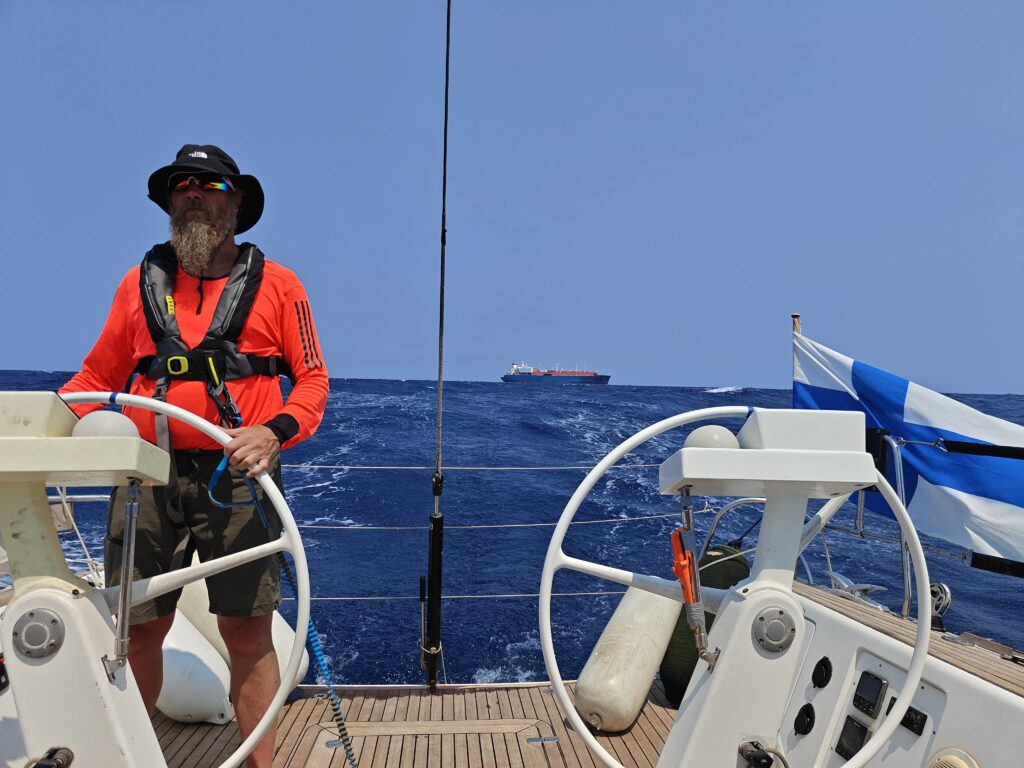
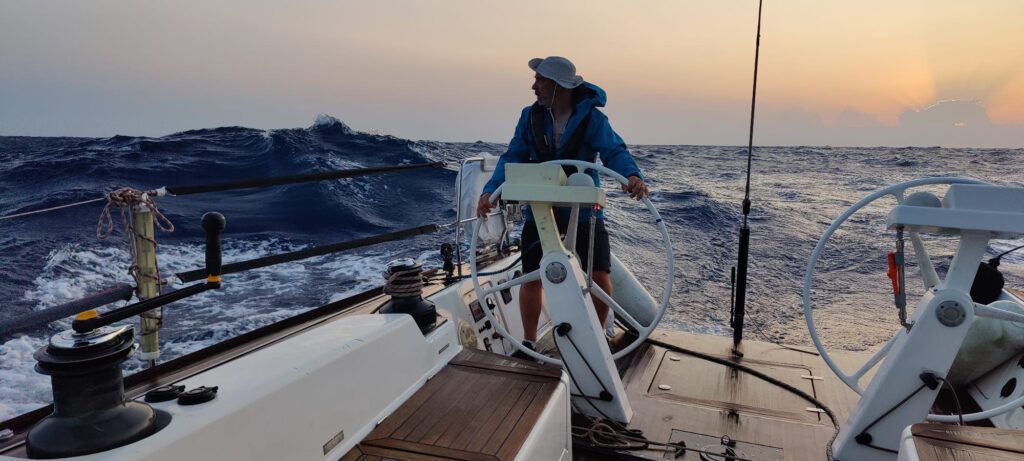
The wind and swell picked up during the night. We adjusted the roller-furling system slightly and set the third reef on the mainsail. Sailing in 3–4-metre swells at night was a new experience for many of the helmsmen. When the bow plunges downwards in pitch-black darkness at sea, that first time certainly sticks in your mind. The SLY47 really is a brilliant boat to sail. No trouble at all in conditions like that. It’s certainly a wild ride.
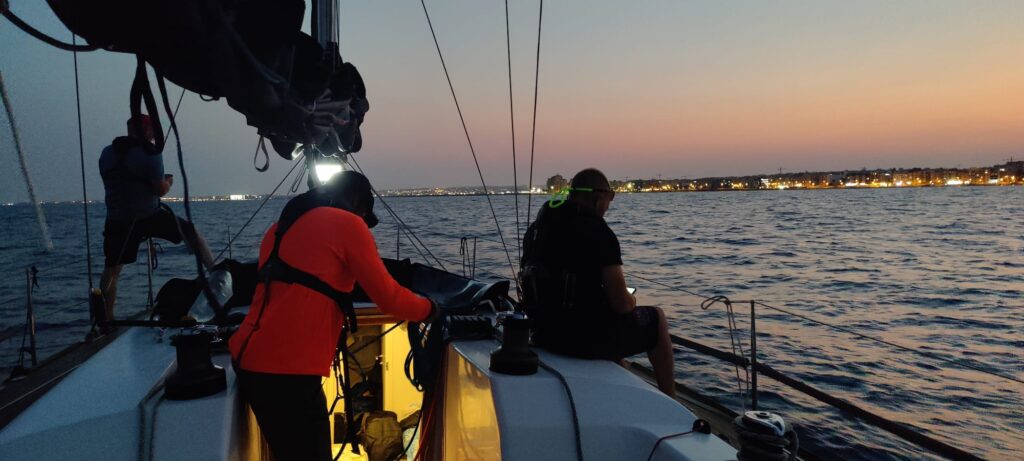
In the morning, we noticed that the Windex and VHF antenna had gone missing from the top of the mast during the night. We were able to test the spare antenna, which worked perfectly. There were waves and wind during the morning, but things calmed down afterwards. There was shipping traffic throughout the journey. As we approached Spain, the traffic increased significantly. The lookout monitored it using AIS data and the radar. They’re handy systems. The relaxed final stretch was crowned by the lights of Torrevieja appearing on the horizon in the early evening. We moored at dusk at the berth Tommi had booked. We had a shower and went out for some burgers. A cold Coke was just the thing after a few days of drinking lukewarm water. We’d been at sea for 3 days and 2 hours. The distance covered on this leg was 450 nm.
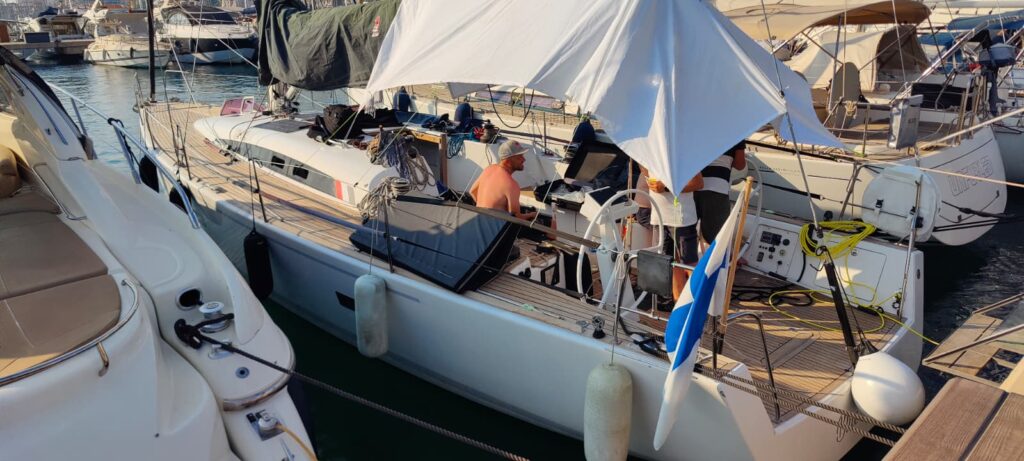
We spent the following day at the jetty carrying out maintenance work. We found that the tank had been cleared of algae. We fitted the Starlink mount, installed new bushings on the boom bracket, inspected the masthead for damage, and did a whole lot more. In the evening, we flew to Helsinki.
Written by Janne